
Want next week planned and priced? Mittsy is free.
The average American household spends about $270 a week on groceries, according to USDA data. A lot of that disappears in impulse purchases and food that spoils before anyone touches it. Meal planning on a budget solves both problems at once: you decide what you’re cooking before you leave the house, which keeps the cart predictable and the bill lower. This guide covers six practical steps you can use this week, plus a sample priced plan for a family of four at the end.
To meal plan on a budget, set a weekly spending target first, then audit your pantry, plan 5-7 dinners around affordable proteins and shared ingredients, and build a priced grocery list before you shop. Each step closes a different money leak: impulse buying, forgotten pantry stock, and uncooked food that spoils.
Step 1: Set a Realistic Weekly Spending Target
Before you plan a single meal, you need a number to plan against.
The USDA publishes four official cost-of-food tiers each month: Thrifty, Low-Cost, Moderate, and Liberal. In 2026, the Thrifty plan targets roughly $55-$65 per week for a single adult, $115-$135 for two adults, and $160-$190 for a family of four with two children. These figures assume almost all meals cooked at home, US supermarket prices, and no restaurant spending. The Low-Cost plan, one tier up, runs about 25% higher and covers households that occasionally buy pre-made shortcuts like rotisserie chicken or jarred pasta sauce. For practical budget planning, treat the Thrifty range as a floor and the Low-Cost range as your realistic working target. If your household currently spends $300+ per week, cutting to $220 and holding it there is a meaningful win. The USDA numbers are updated monthly at fns.usda.gov/cnpp/usda-food-plans-cost-food-reports.
For more context on where these benchmarks fit for your household size, see Grocery Budget for Family of 4: Realistic 2026 Numbers.
Step 2: Audit Your Pantry Before You Open Any App
Most kitchens hold more food than anyone realizes.
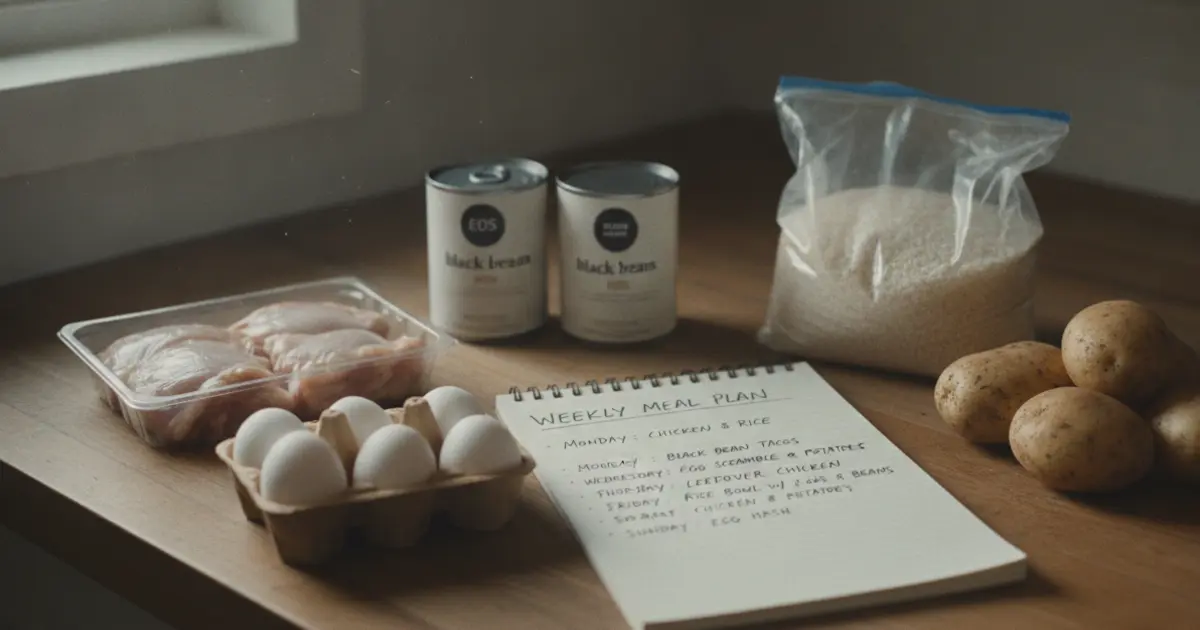
A ten-minute pantry audit usually surfaces two or three ingredients that can anchor a dinner: a can of black beans, half a bag of pasta, some frozen chicken thighs, a box of rice. Cooking from what you already own before buying more is the cheapest grocery run you can take. The EPA estimates the average family of four wastes nearly $3,000 worth of food per year. A pantry audit chips directly into that number.
Work through proteins first, then grains and canned goods, then produce on its last day. Build at least one dinner around pantry stock. If the eggs are getting close to the date, plan a frittata. If there’s half a butternut squash left from last week, plan a soup night. The goal is to subtract what you already own from what you need to buy.
Mittsy’s pantry feature does this automatically. Mark items as “already have” during onboarding and the grocery list strips them out for every week going forward. Staples like olive oil, garlic, and dried pasta won’t clutter the list once you’ve flagged them as pantry regulars.
Step 3: Plan Dinners First
Dinner drives the list. Breakfast and lunch mostly come from what’s already in the house.
Dinner is the one meal that requires specific ingredients bought on purpose each week. Plan 5 dinners; leave 2 nights as leftovers or a simple eggs-and-toast situation. That pattern keeps shopping lists short and removes the daily “what’s for dinner” decision at the end of a long day.
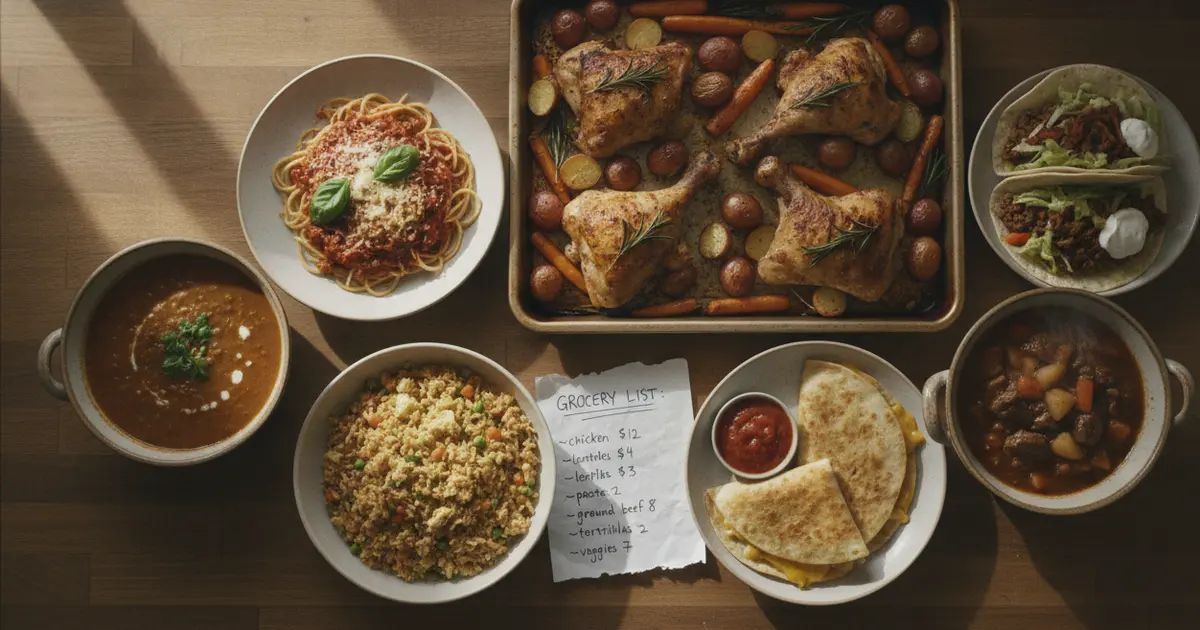
The most effective budget move in this step is ingredient overlap: choosing two or three proteins that appear across multiple meals. Buy one pack of chicken thighs (~$8-$10 for 8-10 pieces at most US stores) and it covers three nights: sheet-pan thighs with roasted potatoes on Monday, a quick chicken soup on Wednesday from the leftover pieces, and chicken quesadillas on Friday. You buy the protein once; the work stretches across the week.
The weekly dinner plan guide has a full rotation system for building 7 dinners that share ingredients without repetition getting old.
Step 4: Lean on Budget-Friendly Core Proteins and Carbs
A short list of ingredients carries most of the work in budget cooking.
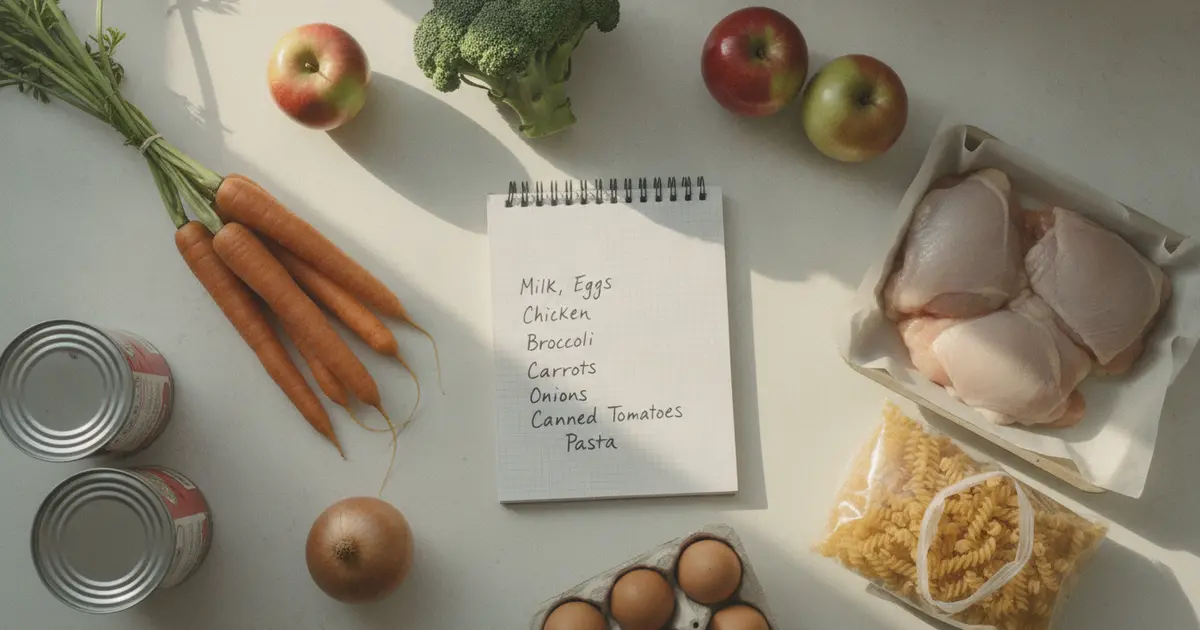
On proteins: chicken thighs ($1.80-$2.50 per lb), eggs ($3-$4 per dozen, about $0.25-$0.33 per egg), canned beans ($1.00-$1.50 per can for two servings), canned tuna ($1.50-$2.00 per can), and 80/20 ground beef when it’s on sale. Chicken thighs run 50-60% less than boneless chicken breasts and stay moist in any cooking method.
On carbs and vegetables: potatoes ($0.40-$0.60 per lb), rice ($0.15 per serving from a 5 lb bag), pasta ($0.20-$0.30 per serving), frozen broccoli ($1.50 per 12 oz bag), and carrots. These hold their price year-round regardless of season.
A dinner built around chicken thighs, rice, and frozen broccoli runs about ~$2.50-$3.50 per serving. For a family of four, that’s ~$10-$14 per meal. Ordering delivery for the same meal typically costs ~$12-$18 per person.
Step 5: Build an Aisle-Sorted Grocery List
The grocery list is where the plan becomes a number you can actually hold.
An aisle-sorted list cuts time in the store, which directly reduces impulse purchases. Consumer research consistently shows unplanned purchases account for a meaningful share of grocery spending; keeping the visit short and purposeful is the simplest defense. Group items: produce together, dairy together, meat and fish together, canned and dry goods together. Walk one direct path through the store and leave.
If you’re writing the list by hand, add a rough cost estimate next to each item (“chicken thighs ~$9”, “rice ~$2”). A running tally lets you spot an over-budget week at home, where trimming is easy, rather than at the checkout, where it’s uncomfortable.
Mittsy builds this list automatically from your dinner plan. Every ingredient is pulled from all five meals, aggregated (so one garlic bulb covers three recipes instead of appearing three separate times), and sorted by aisle. With Pro, each line shows an estimated price and you see a weekly total before you leave the house, complete with a budget bar that turns apricot when you’re over. Prices carry the ”~” prefix throughout because they’re estimates from typical shelf prices, not live store feeds, but they’re close enough to catch an over-budget week at the planning stage.
Step 6: Shop Once and Stick to the List
A single weekly shop is cheaper than several smaller ones.
Each extra store visit adds roughly $15-$30 in unplanned purchases. Plan on Sunday, shop Sunday evening or Monday morning, and the week is settled. There are no mid-week trips for “just one thing” that turns into half a basket.
Shopping at two stores occasionally makes sense: Costco or Sam’s Club for bulk proteins when the math works out, Aldi or Walmart for everyday produce and staples. Keep it to two stores, planned in advance. Mittsy splits the grocery list by store tab when you’ve chosen two shops, so you see each store’s items separately without sorting by hand at the shelf.
A Sample Budget Week for a Family of 4
Here’s what “how to meal plan for a family” looks like with real dish names and estimated costs:
| Night | Dinner | Estimated cost |
|---|---|---|
| Monday | Sheet-pan chicken thighs with roasted potatoes | ~$11 |
| Tuesday | Spaghetti with ground beef tomato sauce | ~$9 |
| Wednesday | Black bean tacos with shredded cabbage and salsa | ~$7 |
| Thursday | Leftovers from Monday or Tuesday | ~$0 |
| Friday | Baked salmon with frozen broccoli and rice | ~$14 |
| Saturday | Chicken soup from Monday’s bones and leftover veg | ~$5 |
| Sunday | Fried eggs with roasted vegetables (clear out the week) | ~$5 |
Total for dinners: roughly ~$51 for the week. Add breakfast and lunch staples (eggs, bread, oats, fruit, cheese, deli meat) and most families land between ~$140-$175 for the full week for four people, well inside the USDA Thrifty range.
The meal plan for family of 4 article has a complete priced grocery list for this kind of week. And the batch cooking guide explains how to plan Thursday’s leftover night and Saturday’s soup into the week without adding cooking time.
Frequently Asked Questions
How much should I budget for groceries per week on a budget?
The USDA 2026 Thrifty plan targets $55-$65 per week for a single adult, $115-$135 for two adults, and $160-$190 for a family of four with two children. These assume nearly all meals cooked at home. Add 10-15% as a buffer for price changes and the occasional convenience shortcut.
What’s the cheapest way to meal plan for the week?
Plan around affordable proteins (chicken thighs, eggs, canned beans, ground beef) paired with low-cost carbs (rice, pasta, potatoes). Use ingredient overlap so the same protein appears across 2-3 dinners. Audit your pantry first so you’re not buying what you already own.
How do I meal plan for a family on a budget?
Set a target of $160-$190 per week (USDA Thrifty for a family of four), plan 5 dinners with ingredient overlap, build at least one leftover or batch night, and put together an aisle-sorted list before shopping. Dinners averaging ~$8-$14 per meal for the whole family stay comfortably inside that range.
Can I meal plan on a budget without cooking everything from scratch?
Yes. A rotisserie chicken (~$7-$9 at most US stores) stretches into 2-3 meals and cuts prep significantly. Canned beans, frozen vegetables, and pre-cooked grains are real shortcuts that stay within budget. The key is putting these on the list before you shop, not grabbing them on impulse.
How do I avoid going over budget at the grocery store?
Build the list before you leave, add a cost estimate to each item, shop once per week, and avoid the store when you’re hungry. A running cost estimate on your list catches over-budget plans at home, where trimming is easy, rather than at the checkout, where it isn’t.
Mittsy is a free meal planner that builds an aisle-sorted grocery list the moment you add recipes to your week. The free tier covers the full cookbook, planner, grocery list, and pantry with no paywall. Pro adds estimated prices per line and a weekly total so you can see exactly where you stand before you leave. Download on the App Store or Google Play and start your first budget week today.
Related reading: Mealime Shutdown (Oct 21): Best Alternatives + Review · Meal Prep Ideas for the Week: 5 Dinners, Priced · Cheap Healthy Meals: 10 Dinners Under ~$3 a Serving