
Want next week planned and priced? Mittsy is free.
The “what’s for dinner” question lands harder when four people are at the table. You need something fast, the kids need something they’ll actually eat, and you need to stay under budget. A meal plan for family of 4 turns that nightly scramble into a five-minute check of the fridge. This article gives you a concrete seven-day dinner plan with estimated costs per night, an aisle-sorted grocery list, and a few rules that make the whole thing easier to repeat every week.
A weekly meal plan for a family of 4 covers 7 dinners with a shared grocery list. Aim for ~$70–$90 per week on dinners at a typical US grocery store. Pick one batch night, include one meatless dinner to cut costs, and overlap proteins so you buy one larger pack instead of two smaller ones.
A 7-Day Meal Plan for a Family of 4 (Priced)
The plan below is built for a household of two adults and two kids, shopping at a mainstream US grocery store like Kroger, Walmart, or Aldi. Every price is an estimate based on typical shelf prices; your total varies by store, region, and what’s already stocked in your pantry.
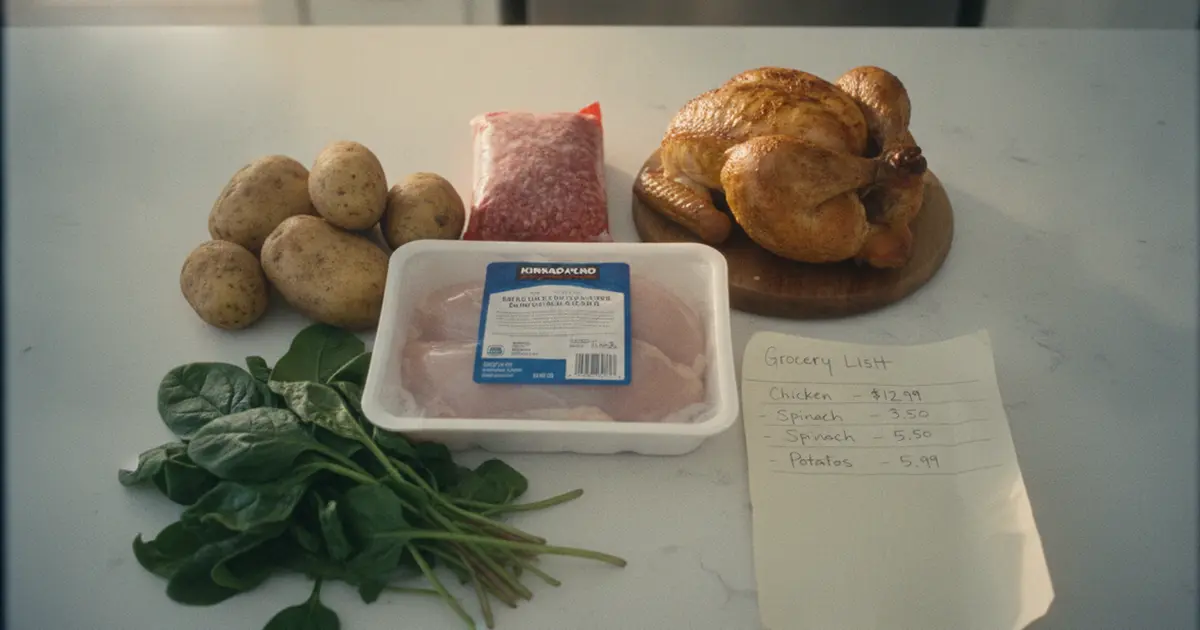
The plan uses chicken on Monday, Friday, and Sunday. Buy one family-size pack of boneless thighs (~3 lb, ~$9), roast them Monday, shred the rest Friday for quesadillas. Sunday’s pulled chicken goes in the slow cooker in the morning. That overlap is the core mechanic behind any budget-friendly dinner plan: cook once, use the results across two or three meals.
Families in the US spend roughly $950 to $1,300 per month on groceries for a household of four, according to the USDA Cost of Food report (thrifty to moderate-cost plans, 2024). For dinners alone, most families land between $70 and $110 per week depending on protein choices, pantry depth, and the store they shop at. Structuring the week to include one meatless night (beans or eggs as the main protein) and deliberate batch nights typically holds the dinner total to the lower half of that range. Overlapping proteins across two dinners lets you buy a larger pack at a lower per-ounce price: a 3 lb tray of chicken thighs at Kroger runs ~$9, compared to ~$7 for a single 1.5 lb pack at roughly the same unit price. Planning the full week before building the grocery list also cuts waste. The USDA Economic Research Service estimates that US households throw away roughly 30–40% of the food they buy, with unplanned purchasing accounting for a significant portion of that loss. A written plan with a matching list addresses both problems at once.
| Night | Dinner | ~Cost for 4 |
|---|---|---|
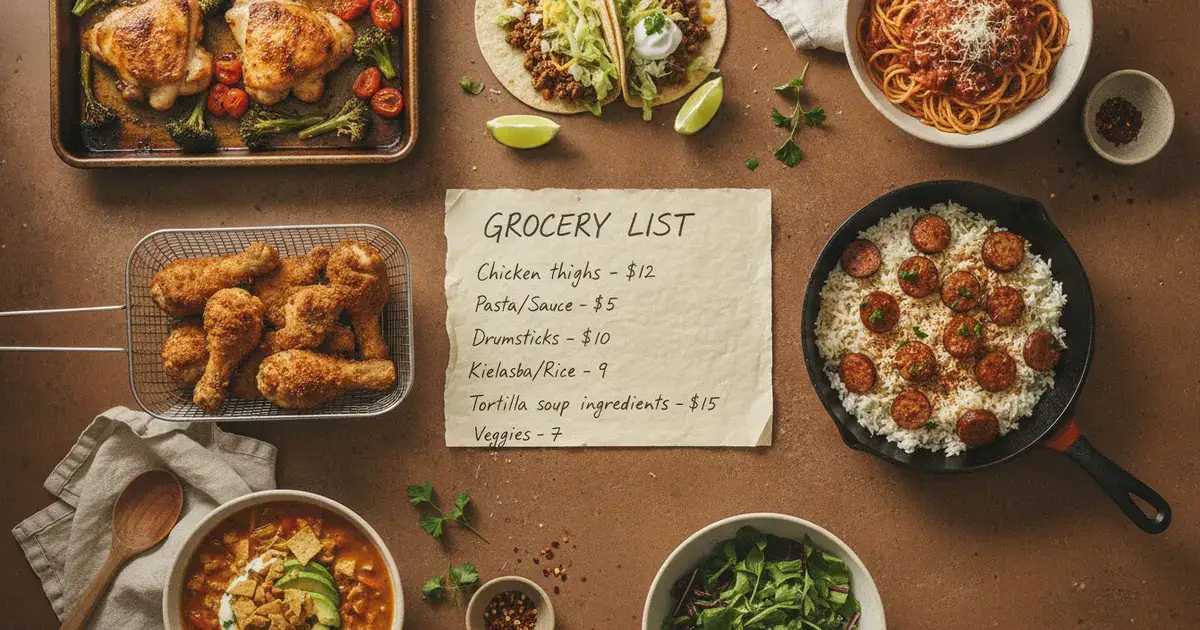
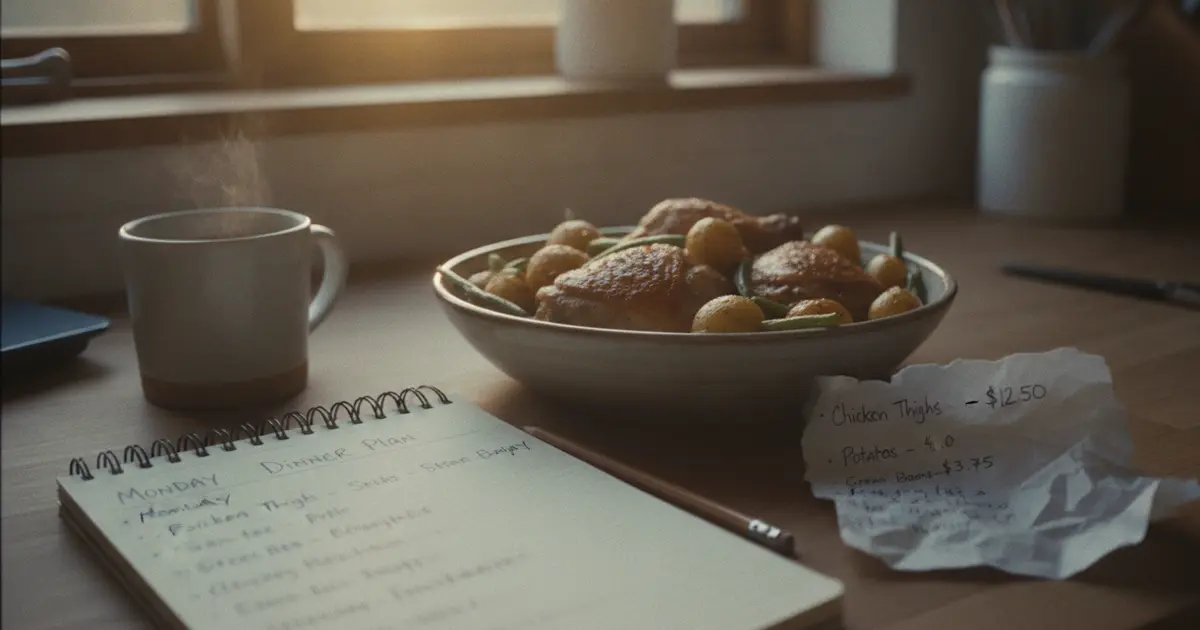
| Monday | Sheet-pan lemon chicken thighs, roasted potatoes, green beans | ~$9 |
| Tuesday | Ground turkey taco bowls with rice, cheese, and salsa | ~$11 |
| Wednesday | Italian sausage pasta with marinara and a side salad | ~$10 |
| Thursday | Black bean and vegetable soup, crusty bread (meatless) | ~$7 |
| Friday | Chicken quesadillas with leftover Monday chicken | ~$8 |
| Saturday | Beef and broccoli stir-fry over rice | ~$13 |
| Sunday | Slow-cooker pulled chicken sandwiches with coleslaw | ~$12 |
| Week total | ~$70 |
Monday’s chicken thighs are the anchor. Roast the full pack, shred the leftovers, and Friday’s quesadillas are mostly already done. Thursday’s bean soup is the budget anchor: two cans of black beans, a can of diced tomatoes, onion, garlic, cumin, and a box of broth comes out to ~$7 for four. About 25 minutes of cooking, and the crusty bread from Wednesday carries it.
For a closer look at realistic grocery spending for four people, the grocery budget for family of 4 guide covers USDA plan ranges, pantry staple costs, and what a thrifty week actually looks like at the checkout.
The Grocery List for This Plan (By Aisle)
Produce
- 5 lb russet potatoes
- 1 lb green beans (fresh or 12 oz frozen bag)
- 1 head broccoli
- 1 bag coleslaw mix (16 oz)
- 2 bell peppers
- 1 white onion
- 1 small garlic bulb
- 1 lime
- 1 bag salad greens (5 oz)
Meat
- ~3 lb boneless chicken thighs (covers Monday, Friday, and Sunday)
- 1 lb ground turkey
- 12 oz Italian sausage (links or ground)
- 1 lb beef sirloin strips or flank steak
Dairy
- 1 bag shredded Mexican cheese blend
- 1 small tub sour cream
Pantry / Dry Goods
- 2 lb bag long-grain white rice
- 1 lb pasta (penne or spaghetti)
- 24 oz jar marinara sauce
- 8-count flour tortillas
- 2 cans black beans (15 oz each)
- 1 can diced tomatoes (14.5 oz)
- 32 oz chicken broth
- 1 jar salsa (16 oz)
- 1 loaf crusty bread
- 1 pack sandwich buns (4-6 count)
- Soy sauce and sesame oil (if not already in the pantry)
Estimated total: ~$70
This assumes the pantry already has olive oil, salt, black pepper, cumin, garlic powder, paprika, and cornstarch. If you’re stocking from scratch, add ~$15 for those staples.
How to Build a Meal Plan for a Family
The plan above is a starting point. Your household’s version looks different depending on allergies, picky eaters, appliances, and the store you shop at. A few principles that hold across most families:
Anchor on one protein per week. Chicken is the most flexible: it roasts, shreds, stir-fries, and goes in soup. Buy a larger pack and plan two dinners around it. The per-ounce cost drops and the grocery list gets shorter.
Include one batch night. Sunday’s pulled chicken takes about 10 minutes of hands-on work. The slow cooker does the rest. Batch nights pay off because the effort doesn’t scale with the quantity: cooking for 8 sandwiches takes almost the same time as cooking for 4.
Plan one meatless night. Thursday’s bean soup costs ~$7 for four, or about $1.75 a plate. Swapping one meat dinner per week for beans or eggs saves ~$5–$8 on that night alone.
Decide the week before you write the list. Most families build the grocery list first and figure out dinners second. That’s the pattern that leaves bell peppers going soft in the crisper on Friday. Settle the seven dinners, then pull the ingredients from those.
Subtract what’s already in the pantry. If half a bag of rice and a jar of salsa are already on the shelf, they come off the grocery total. Checking the pantry before shopping is one of the fastest ways to trim ~$10–$15 from a weekly run without changing what you eat.
If you prefer a store-specific plan built entirely around one retailer’s stock, the Aldi meal plan shows the same 7-dinner format with Aldi shelf prices.
How Mittsy Handles This for You
Writing a meal plan from scratch every Sunday takes 20–30 minutes if you’re doing it carefully: checking the pantry, pricing things out, building the list by aisle, and accounting for who’s eating what and which nights are busy. Mittsy handles all of that in one step.
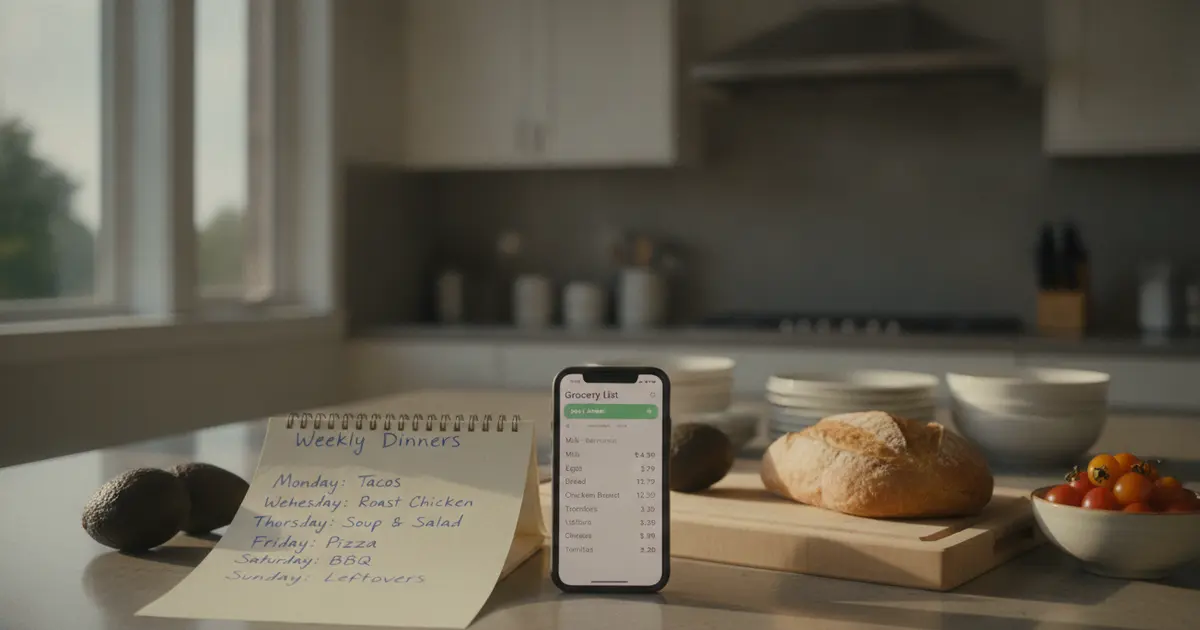
Set your weekly dinner budget, household size, dietary preferences, and the store you shop at (you can pick two). Mittsy Pro works as a meal planner for family of 4 households and generates a full seven-day dinner plan, then builds an aisle-sorted grocery list with an estimated price on every ingredient line. A budget bar shows the projected total against your target before you leave the house. Prices carry the ”~” prefix throughout because they’re estimates from typical shelf prices, not a live store feed.
Pantry items you’ve already marked subtract from the list and the bill automatically. Batch nights and leftover slots get planned on purpose, not discovered by accident on Wednesday when you forgot to plan dinner.
The cookbook, manual planner, grocery list, and pantry are free. The AI-generated week, ingredient prices per line, and Fridge Chef (photo of your fridge, recipe suggestions from what’s there) are part of Mittsy Pro.
Frequently Asked Questions
How much does a meal plan for a family of 4 cost per week?
A dinner-only meal plan for four typically runs ~$70–$100 per week at mainstream US grocery stores. The USDA’s thrifty food plan puts total household food spending for a family of four at roughly $950–$1,000 per month; dinners account for about 40% of that. One meatless night and overlapping proteins across two dinners generally keeps the dinner total under $85 most weeks.
What are the best dinners to include in a family meal plan?
Sheet-pan meals, slow-cooker dishes, and stir-fries are the most practical for families. All three scale easily to four-plus servings, require minimal active cook time, and leave the kitchen cleaner than multi-pot recipes. Taco bowls, pasta, and quesadillas work as reliable fallback nights because most families already know how to make them.
How do I plan meals for picky eaters?
Pick flexible-format dinners where each person controls their own plate: taco bowls, quesadillas, pasta with sauce on the side, stir-fries over rice. Keep one guaranteed crowd-pleaser in the week, then build the more varied nights around it. Keeping the base constant (ground turkey, rice, beans) and varying the toppings usually satisfies everyone.
Can I meal plan for a family of 4 on $50 a week for just dinners?
Yes, with some adjustments. Cut the red meat nights (beef and turkey are the costliest proteins in a typical plan) and add a second meatless night. Eggs, canned tuna, and lentils can carry a dinner for four for under $6. Buying chicken in a larger pack at Costco or on sale also helps. A well-structured plan can hit $50 for dinners at a store like Aldi.
How many servings should each dinner feed for a family of 4?
Plan for 5 servings per dinner, not 4. The extra serving covers a teenager’s second plate or becomes lunch the next day. Most recipes scale to 5 by adding one more piece of chicken or an extra cup of rice, with no change to the method or timing.
Download Mittsy free on iOS and Android. Set your household size, budget, and store, and the app plans the week and prices the list for you.