
Want next week planned and priced? Mittsy is free.
Sunday afternoon can pay dividends for the rest of the week. That’s the core idea behind batch cooking: spend 2-3 hours cooking in volume on one day, then pull fast dinners together from what you’ve already made. Instead of starting from scratch every night, you’re finishing something.
Batch cooking works for busy households, solo cooks, and anyone tired of the 6 p.m. “what’s for dinner?” scramble. It’s one of the most reliable ways to get a home-cooked meal on the table in under 20 minutes on a Tuesday night when nobody has energy left.
Batch cooking means preparing a large quantity of a dish or ingredient in one cooking session, then using those components across multiple dinners during the week. The most common approach is a 2-3 hour cook on Sunday that covers Monday through Wednesday. Most households save 30-45 minutes of active kitchen time per weeknight dinner as a result.
What Is Batch Cooking?
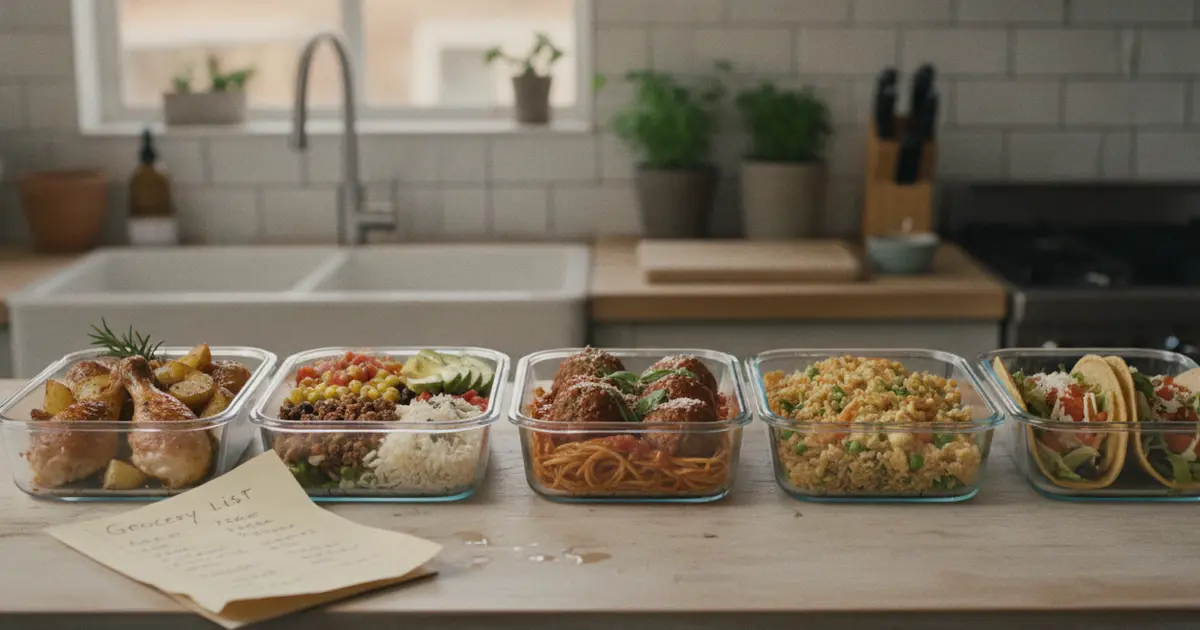
Batch cooking is the practice of making a large portion of a dish or ingredient in one session, then reusing it across different meals. You cook a full pot of chili on Sunday, eat it Tuesday, and turn the rest into stuffed peppers on Thursday. You roast a whole tray of chicken thighs Monday, serve half with potatoes, and pull the rest into fried rice two days later.
It’s different from traditional meal prep in one important way. Meal prep usually means assembling identical ready-to-eat portions into containers. Batch cooking gives you components (a cooked protein, a grain, a sauce) that remix into genuinely different dinners. Monday’s lemon chicken doesn’t feel like a rerun when it shows up as tacos on Wednesday.
Batch cooking reduces weeknight cooking time from 30-45 minutes per dinner to roughly 10-20 minutes of reheating and assembly. A 2-3 hour Sunday session typically covers 4-5 dinners, cutting total active kitchen time for the week from roughly 3-4 hours down to under 2 hours combined. The financial case is just as direct. Cooking in volume means buying exact quantities for a full week’s cooking in one trip, which cuts mid-week top-up runs, the kind of unplanned stops where grocery budgets quietly overshoot. The USDA estimates that American households waste roughly 30-40% of the food supply at the consumer level, with imprecise shopping being a primary driver. A household running 2 planned batch nights per week buys more precisely (one batch of slow cooker pulled pork covers two full dinners’ worth of protein) and takes advantage of the lower per-unit cost that comes with buying full pack sizes rather than smaller quantities.
How Batch Cooking Saves 3+ Hours a Week
The math is simple. Cooking a single dinner takes 30-45 minutes including prep, cooking, and cleanup. Five weeknights comes out to 2.5-3.75 hours of active kitchen time. A batch session in one 2-hour block on Sunday covers most of those same meals.
The “cook once, eat twice” structure is the easiest place to start. Pick one protein per week that appears in two different forms:
- Slow cooker pulled pork on Sunday, tacos Monday, rice bowls Wednesday
- Roast chicken thighs Tuesday with potatoes, pulled into fried rice Thursday
- Beef bolognese Monday for pasta, stuffed peppers Wednesday
You’re not eating the same dinner twice. The protein is the same; the shape of the meal is different.
Batch cooking stacks well with a leftover night too. One planned leftover slot cuts prep time to zero and wastes nothing. The difference from accidental leftovers is that this night is scheduled and the portion is cooked on purpose.
5 Batch Cooking Dinners Worth Building Your Week Around
These five work for batch cooking because they hold well for 3-4 days, reheat without falling apart, and split cleanly into two distinct meals.
Sheet-Pan Lemon Chicken
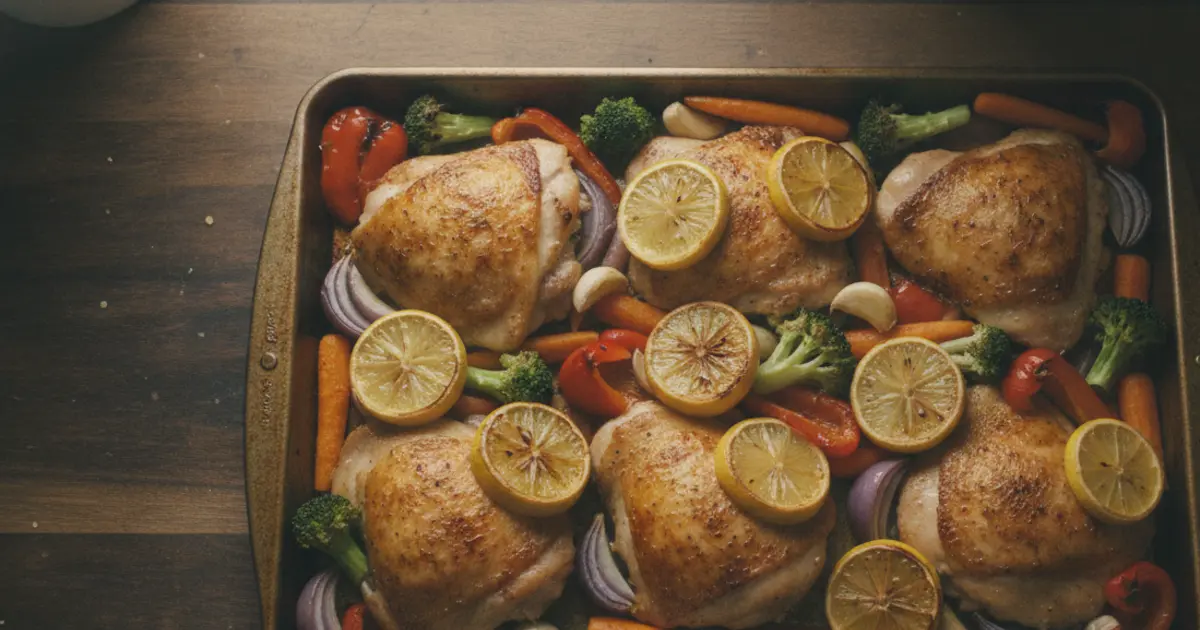
Roast a full tray of bone-in chicken thighs with lemon and garlic ($6-7 for four servings at Kroger or Walmart). Night one: served with roasted potatoes and a green vegetable ($10 total). Night two: pull the meat and serve in warm tortillas with slaw and salsa (~$3 extra for the fixings).
Slow Cooker Pulled Pork
A 3-4 lb pork shoulder ($8-10 at Walmart or ALDI) runs in the slow cooker 6-8 hours with no attention required. Night one: pulled pork sandwiches with coleslaw ($12 total with buns and slaw). Night three: pulled pork over rice with black beans and avocado (~$4 extra).
The leftovers freeze well for up to 3 months if you don’t reach them by day 4.
Beef and Vegetable Bolognese
One large batch using 1.5 lb of ground beef ($7-9) makes enough sauce for two full dinners. Night one: pasta with crusty bread ($11). Night two: spoon the sauce into halved bell peppers, top with shredded cheese, and bake for 25 minutes ($4 for the peppers and cheese).
Lentil Soup A full pot of red lentil soup made with lentils, canned tomatoes, onions, garlic, and cumin costs ~$5-6 for 8 servings. Night one: ladled out as soup with bread. Night two: thicken the leftovers and serve over rice with a fried egg on top. Covers two nights and a couple of lunches for a family, or stretches across most of a week for a solo cook.
Roast Chicken Thighs with Tray Vegetables Bone-in thighs plus whatever vegetables are cheapest that week, all roasted together (~$10-12 for four servings). Leftover chicken pulls off the bone in about 2 minutes and goes straight into fried rice the next night with a couple of eggs, frozen peas, and soy sauce.
For a priced 7-night example where a batch night anchors the whole week’s shopping, see the full meal plan for family of 4.
How to Build Batch Cooking Into Your Weekly Plan
The friction with batch cooking isn’t the cooking itself. It’s coordinating which dinners share an ingredient and spacing them two nights apart so the leftovers are still good. That planning step is easy to skip during a busy week, which is why batch cooking often starts strong in January and fades by March.
For manual planning, the simplest rule: pick your batch dinner first, schedule it for Sunday or Monday, then block a slot two nights later for the remix version. Write both dinners on the same grocery list and buy the combined quantity in one trip.
Mittsy builds batch nights into the weekly plan automatically. During setup you tell it how many batch nights you want each week (typically 1-2), and the app spaces them correctly: the source dinner lands early in the week, the “cook once, eat twice” night lands two nights later. The planner makes sure the same protein appears in both slots and that they’re different cuisines, so Monday isn’t a rerun on Wednesday.
The grocery list comes out sorted by aisle, with both nights’ worth of chicken combined into a single line item. If you already have chicken thighs in your pantry from last week, the app subtracts them from the list automatically. Pro users also see estimated prices per recipe and a weekly budget bar showing the total before you leave the house. See the weekly dinner plan guide for more on building the full 7-night structure around batch nights.
Batch Cooking Freezer Meals
Batch cooking and freezer meals overlap, but they’re different habits. Batch cooking typically covers the current week. Freezer batch cooking means deliberately doubling a recipe to bank meals for later.
Foods that freeze well: soups, stews, chili, bolognese, pulled pork, braised meats, cooked beans, and most casseroles. Foods to skip: anything with cream sauces (they separate), potatoes (they go grainy), and dishes with fresh leafy greens mixed in.
Standard freezer storage for cooked proteins and stews is 2-3 months. Label everything with the date and contents before it goes in. An unlabeled container from three months ago is how freezer meals stop working.
A Costco pork shoulder (~$12-15 for 4-5 lb) is one of the better batch cooking freezer investments. Cook it all in the slow cooker, serve two nights’ worth this week, and freeze the rest in portioned bags. That’s 4-6 future dinners at roughly ~$2.50-3 per serving. The Costco meal prep guide walks through how to split a full bulk shop across a week of batch dinners.
Mittsy’s Fridge Chef feature (Pro) can help when a frozen batch resurfaces. Take a photo of what’s thawing, and it’ll suggest 3-5 dinners using it alongside whatever else is in your kitchen.
Frequently Asked Questions
What’s the difference between batch cooking and meal prep?
Batch cooking means making a large quantity of one dish or ingredient and reusing it in different meals across the week. Meal prep usually means portioning identical ready-to-eat containers for the week. Batch cooking gives you more variety; meal prep is faster to grab on the go.
How long do batch-cooked meals last in the refrigerator?
Cooked proteins and stews keep for 3-4 days in the fridge. Cooked grains last 4-5 days. Fish and seafood should be eaten within 2 days. If a batch dinner is scheduled for day 5 or later, freeze a portion right after cooking and thaw it the day before.
What are the best dishes to batch cook for beginners?
Sheet-pan proteins (chicken thighs, pork tenderloin), slow cooker braises (pulled pork, beef chuck), and large-pot soups and stews are easiest to start with. They require minimal active cooking time, hold well in the fridge, and split cleanly into two completely different meals.
Can you batch cook for one person?
Yes. A pot of lentil soup or bolognese that costs roughly ~$8-10 to make covers 4-6 servings, working out to under $2 per meal. Solo batch cooking arguably makes even more financial sense because a single pack of chicken thighs covers more nights proportionally.
How does batch cooking reduce grocery spending?
You shop for exact quantities for a full week’s cooking in one trip, instead of buying random items that get partially used and wasted. Cooking in volume also lets you buy larger pack sizes at a lower unit cost. Most households that batch cook consistently spend less on groceries per week than those who cook each dinner from scratch.
Start with One Batch Night
Batch cooking doesn’t require a full Sunday overhaul. Pick one dinner this week, double the protein, and schedule the remix two nights later. One slow cooker pork shoulder, two completely different dinners.
Mittsy plans both nights into your week automatically, calculates the combined grocery quantities, and prices the list before you leave the house. Download the app at mittsy.app and set up your first batch week in a few taps.