
Want next week planned and priced? Mittsy is free.
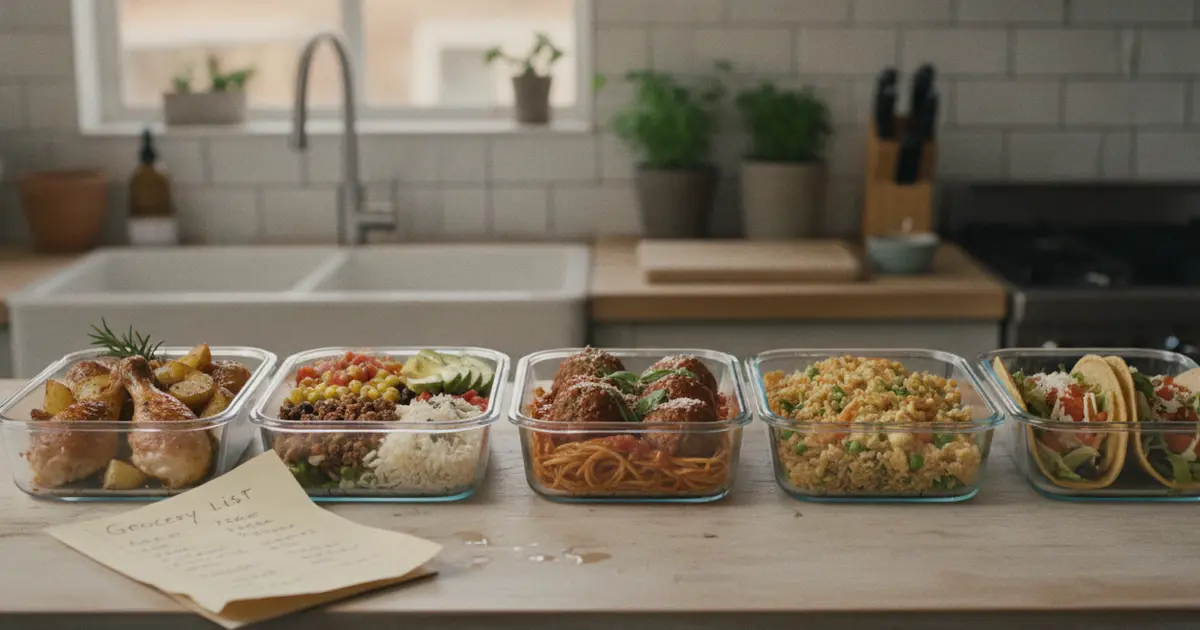
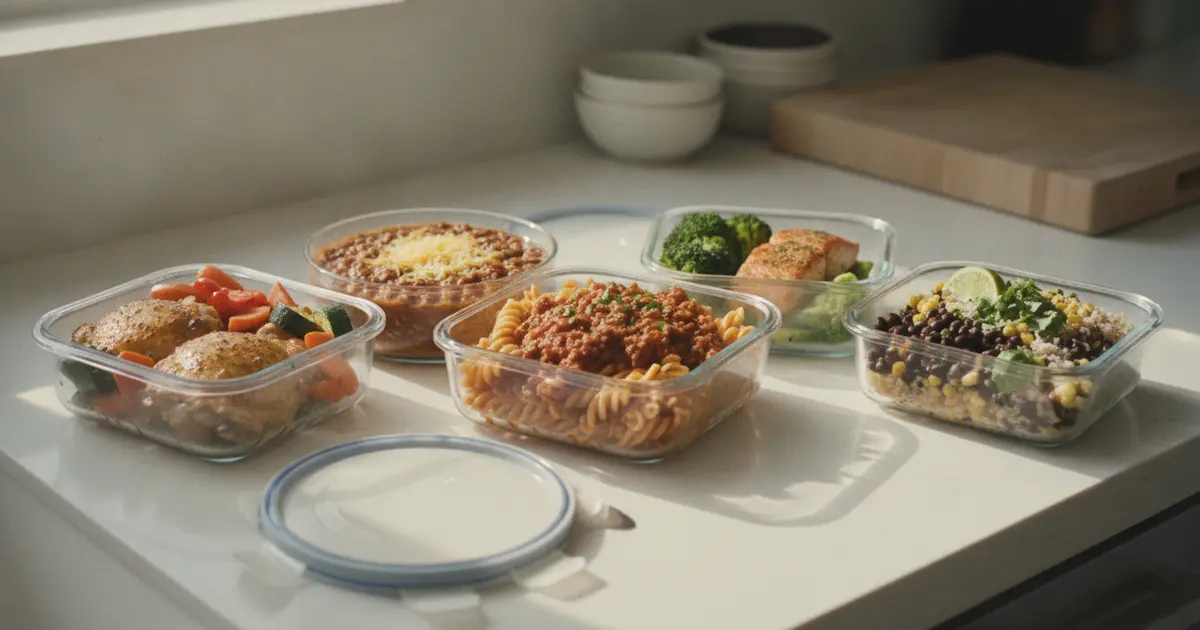
Feeding five people every night is its own math problem. Standard recipes serve four, so you’re scaling up on the fly or someone goes short. Add a tight budget and a couple of picky eaters, and the nightly “what’s for dinner?” question starts to feel like a second job. A meal plan for a family of 5 solves this in one go: pick seven dinners on Sunday, build the grocery list, and the rest of the week becomes execution. This article gives you a concrete week of dinners, ~cost estimates per night, and an aisle-sorted grocery list to take to the store.
A meal plan for a family of 5 covers 7 dinners scaled for five servings each. Budget roughly ~$95 to $115 per week for dinners at mainstream US grocery stores. One batch-cooking night (chili, pulled chicken, soup) generates extra portions for next-day lunch at no additional cost, which effectively funds two meals for the price of one.
A 7-Night Meal Plan for a Family of 5 (with ~Cost Per Night)
The plan below is built for five people shopping at a US grocery chain like Kroger, Walmart, or Aldi. Every price carries a ”~” because these are typical shelf estimates, not live store data.
Seven dinners for a family of 5 typically run between $90 and $120 per week when you mix proteins strategically. Chicken thighs ($2.30 to $2.80 per lb) and ground beef ($4 to ~$5 per lb) carry most of the protein nights, with pasta, rice, and canned beans filling the cheaper evenings. A household of 5 eats roughly 21 dinner servings per week. At this plan’s total of ~$101, that works out to about ~$2.88 per serving and ~$4.80 per person per night. One batch-cooking night, like chili or slow-cooker chicken, generates three to five extra portions for next-day lunch at no added cost. That keeps the effective per-meal cost lower across the full week. A dinner budget of ~$95 to $115 is realistic for most families cooking at home five or more nights, with one splurge protein and one intentionally cheap night to balance it out.
| Night | Dinner | ~Cost for 5 |
|---|---|---|
| Monday | One-pot chicken thighs with rice and peas | ~$12 |
| Tuesday | Beef and bean chili with skillet cornbread (batch night) | ~$15 |
| Wednesday | Spaghetti with meat sauce | ~$11 |
| Thursday | Sheet-pan Italian sausage with peppers and onions over rice | ~$17 |
| Friday | Baked mac and cheese with a bagged salad | ~$10 |
| Saturday | Chicken stir-fry with broccoli and carrots over rice | ~$12 |
| Sunday | Baked salmon with roasted sweet potatoes and green beans | ~$24 |
| Week total | ~$101 |
Monday’s one-pot chicken is the easiest start to the week: bone-in thighs, rice, and broth all go into the pot together. Tuesday’s chili is the batch night. One pound of ground beef, two cans of kidney beans, a can of diced tomatoes, and a box of cornbread mix makes eight full servings. Dinner for five, then three containers in the fridge for Tuesday and Wednesday lunches.
Friday’s baked mac is the budget anchor. Homemade with elbow pasta, two cups of shredded cheddar, butter, and milk costs about ~$8 for five people. Add a bagged salad for ~$2 and dinner comes in under ~$10. Sunday’s salmon is the week’s splurge, and it earns its spot: it’s the only fish night, it takes 20 minutes in the oven, and ~$4.80 per person is still reasonable for salmon.
For context on how this dinner budget fits into overall household grocery spending, the grocery budget for family of 4 guide covers USDA food plan benchmarks you can scale up by 25% to get a family-of-5 target.
How to Scale Recipes for a Family of 5
Most recipes are written for four servings. Scaling to five means adding 25% to everything. For most proteins, that’s a quarter-pound more. For pasta, it’s bumping a 12-oz box to a 16-oz box. For soups and stews, one extra cup of broth or a second can of beans usually closes the gap.
Dishes that live in a large pot scale the most cleanly: the chili and spaghetti sauce on this list are both easy to make bigger. Sheet-pan dishes are trickier. A standard half-sheet pan feeds four comfortably; for five, either use two pans or add a side dish to stretch the main.
The batch-cooking approach cuts the scaling math even further. When Tuesday’s chili makes eight servings instead of five, scaling is a feature rather than a complication. The full logic behind cook-once dinners is in the batch cooking guide.
The Grocery List for This Week
Organized by aisle, with typical per-item price estimates for a mainstream US store:
Meat and Fish
- Bone-in chicken thighs, 2.5 lb (Monday + Saturday) — ~$7
- Ground beef, 2 lb (Tuesday chili + Wednesday sauce) — ~$9
- Italian sausage links, 1.5 lb (Thursday) — ~$7
- Salmon fillet, 1.5 lb (Sunday) — ~$14
Produce
- Bell peppers, 3 — ~$3
- Onion, 2 lb bag — ~$2
- Broccoli, 1 large head — ~$2
- Carrots, 1 lb bag — ~$2
- Sweet potatoes, 2 lb — ~$3
- Green beans, 1 lb — ~$3
- Bagged salad, 1 bag — ~$2
- Frozen peas, 12 oz bag — ~$2
Pantry and Dry Goods
- Long-grain rice, 2 lb bag (covers Monday, Thursday, Saturday) — ~$2
- Spaghetti, 1 lb — ~$1.50
- Elbow pasta, 1 lb — ~$1.50
- Cornbread mix, 1 box — ~$2
- Kidney beans, 2 cans — ~$2
- Diced tomatoes, 1 can — ~$1.50
- Jarred marinara, 24 oz — ~$3
- Chicken broth, 32 oz carton — ~$2.50
Dairy
- Shredded cheddar, 2 bags (mac + salad topping) — ~$8
- Parmesan, small bag — ~$3.50
- Milk, 1/2 gallon — ~$3
- Butter, 1 stick — ~$1.50
Total: ~$90 to $100 (pantry staples like olive oil, garlic, salt, and spices assumed; first-time buyers add ~$10).
This list covers all seven dinners. Nothing on it goes to waste: the bell peppers and onions appear on Thursday’s sheet pan, and any leftover sausage can go into Wednesday’s pasta sauce if you want to vary the week.
Adjusting This Plan for a Family of 6
Most of these dinners stretch to six with one small change. For pasta and rice nights (Monday, Wednesday, Friday), add an extra cup of dry grain and a bit more liquid or sauce. For protein nights, add a quarter-pound to the meat purchase.
Tuesday’s chili is the most forgiving: it already makes eight servings, so a sixth person is fully covered. Sunday’s salmon is the hardest to stretch. Two extra portions add roughly ~$7 to that night’s cost, pushing the Sunday total to ~$30.
The secondary keywords from this search (“meal plan for large family,” “big family meal plan”) point to the same need: scale the portions, keep the structure. A meal plan for family of 4 uses the same weekly format with smaller quantities if you’re ever cooking for a smaller household mid-week.
How Mittsy Builds This Plan for You
Planning this week by hand takes about an hour: checking what proteins are on sale, making sure the week isn’t six chicken nights in a row, scaling recipes, writing the list, and sorting it by aisle. Mittsy’s “Plan my week” (Pro feature) does all of that in about 30 seconds.
You enter your household size, a weekly dinner budget, which stores you shop at (up to two), any dietary restrictions, and what appliances you have. Mittsy generates seven dinners with specific dish names, no repeated proteins on back-to-back nights, and no recipes that call for an ingredient that doesn’t exist on a shelf. The ingredient validator catches that before the plan is delivered.
The grocery list comes out sorted by aisle, per store, with per-ingredient cost estimates and a running budget bar. If a night goes over, the budget swap hint shows a cheaper option: “swap salmon for tilapia, save ~$7.” The free tier includes the full cookbook, weekly planner, and grocery list. “Plan my week” and the estimated prices are Pro features, but free users can see the first two AI-generated dinners before deciding.
Frequently Asked Questions
What is a good weekly grocery budget for a family of 5?
For dinners only, ~$95 to $120 per week is realistic for five people cooking at home most nights in the US. For total household food spending (all meals, snacks, drinks), the USDA Thrifty Food Plan puts a family of five at roughly $195 to $220 per week. The moderate-cost tier runs closer to $320 to $345. A dedicated dinner budget of ~$100 to $115 leaves room for breakfast and lunch without going over either benchmark.
What is the 3-3-3 rule for meal prep?
The 3-3-3 rule means prepping 3 proteins, 3 carbs, and 3 vegetables on one day so they can mix into different meals across the week. For a family of 5, this works well with a slightly larger batch than the standard version: cook one pot of rice, one slow-cooker protein, and one sheet-pan vegetable, and those components can appear in two or three dinners without feeling repetitive.
How much food do I need to feed 5 people for dinner?
A standard recipe that serves 4 needs about 25% more of everything to feed 5. That usually means one extra quarter-pound of protein, an extra cup of grain, and a bit more sauce or liquid. Dishes cooked in a large pot scale cleanly. Baked dishes with a fixed pan size either need two pans or a side dish to cover the fifth serving.
How do I build a cheap family meal plan for a family of 5?
Anchor two or three nights on the cheapest proteins: chicken thighs, ground beef, canned beans, eggs, and pasta. Reserve expensive proteins like salmon or shrimp for one night per week. Include one intentional batch night where dinner makes extra for lunch the next day. That structure gets most families under ~$110 for seven dinners without skipping variety.
A priced grocery list built around seven specific dinners takes the guesswork out of every night. Mittsy does the planning, the pricing, and the list so you can spend the week cooking instead of deciding. Download Mittsy and try the free planner to build your first week of dinners for five.
Related reading: Meal Plan for a Family of 3: 7 Dinners, Priced · AI Meal Planner: What It Does (and What ChatGPT Can’t) · Cheap Meal Plan for a Week: 7 Dinners Under ~$70 (Family of 4)