
Want next week planned and priced? Mittsy is free.
Feeding two people without spending like a family of four is its own math problem. Pack sizes aren’t designed for two, discount-store trips can feel wasteful with a half-empty cart, and most budgeting articles quote a single monthly number that’s somehow both too high and too low depending on where you live.
This article gives you the USDA benchmarks that anchor a realistic grocery budget for two, a full sample week of dinners priced per night, and the four factors that drive most of the variation in a two-person grocery bill.
A realistic grocery budget for two adults in the US runs between ~$90 and ~$175 per week for groceries alone, depending on your store and cooking habits. The USDA’s Low-Cost food plan benchmarks two adults at roughly $130 per week. That figure covers home-cooked meals only, not dining out, coffee runs, or takeout.
What a Realistic Grocery Budget for Two Looks Like
The USDA publishes four spending tiers monthly, adjusted for inflation, covering households of different sizes. For two adults aged 19-50, the 2024 benchmarks break down like this:
| Tier | Per week | Per month |
|---|---|---|
| Thrifty | ~$100 | ~$435 |
| Low-Cost | ~$130 | ~$565 |
| Moderate-Cost | ~$165 | ~$715 |
| Liberal | ~$205 | ~$890 |
Most couples cooking most nights at home land between the Low-Cost and Moderate-Cost tiers: roughly ~$130 to ~$165 per week, or ~$565 to ~$715 per month for groceries.
The USDA’s Thrifty food plan runs around $100 per week for two adults as of 2024 and sets the floor for home-cooked grocery spending in the United States. It’s built for households that cook every meal from scratch, rotate pantry staples deliberately, and waste almost nothing. The Low-Cost plan ($130/week) is more realistic for most couples: it allows a wider variety of proteins, some convenience items, and occasional splurges. The Moderate-Cost plan ($165/week) covers better cuts of meat, more fresh produce, and specialty ingredients. All four tiers are updated monthly for inflation. Between 2020 and 2024, US grocery prices climbed roughly 25-28%, meaning a household tracking at $100/week pre-pandemic needs closer to $125-128 today to buy the same cart. The Liberal plan, at $205/week, reflects households shopping at premium stores with minimal price sensitivity.
Add dining out, takeout, and coffee shops and total food spend for two typically lands between $800 and $1,100 per month, per US consumer expenditure data.
For a bigger household comparison, the USDA numbers for four adults run about twice these figures; see our grocery budget for a family of 4 breakdown for context.
What Affects Your Grocery Bill as a Two-Person Household
Store choice is the single biggest lever. The same week of ingredients at Aldi typically costs 25-35% less than at Whole Foods. The spread between the Thrifty and Moderate-Cost tiers comes mostly from store choice and which proteins you reach for.
Four factors drive most of the variation:
Store: Aldi and Walmart skew toward the Thrifty/Low-Cost range. Kroger and Target land in the middle. Whole Foods and Trader Joe’s push toward Moderate-Cost and above. The store sets the ceiling for what efficient planning can accomplish.
Pack sizes: A two-person household often can’t finish a family-size pack of chicken thighs or a 5 lb bag of rice before things spoil. Buying the right size (or portioning a larger pack into the freezer the same day) prevents waste that quietly inflates the bill by $10-20 per week.
Protein choices: Chicken thighs, ground beef, eggs, canned fish, and dried legumes cost the least per serving. Salmon, shrimp, and lean pork loin cost more. Two-person households tend to swing toward pricier proteins more often because buying one salmon fillet for two feels less extravagant than buying a whole side.
Planned vs. unplanned shopping: Studies put unplanned grocery purchases at 20-60% of the total cart. A list built from the week’s actual plan cuts that share substantially: most households save $15-30 per trip just by shopping from a list.
A Sample Week of Dinners for Two (~$65)
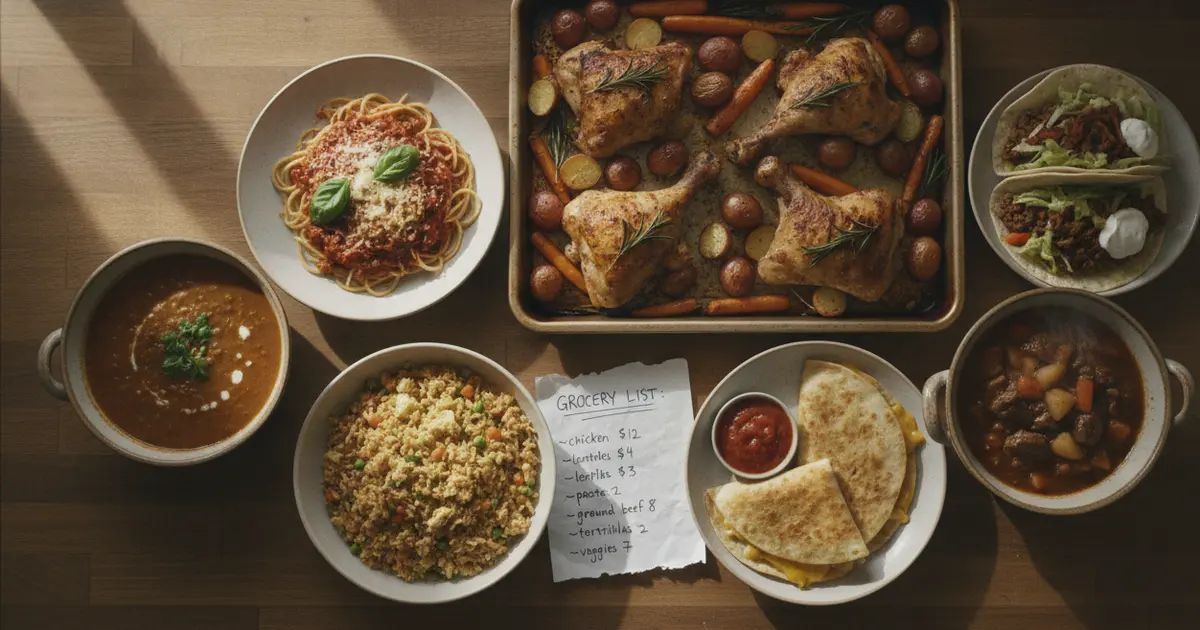
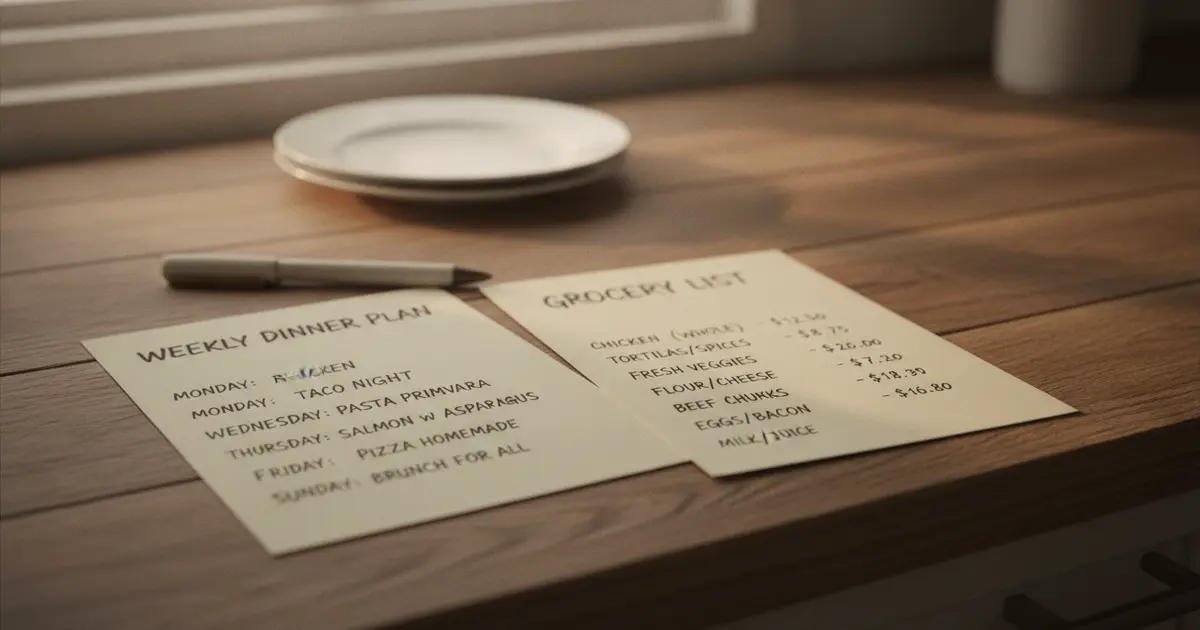
Here’s a realistic priced week built around Walmart, with estimated costs per night for two servings. Pantry staples (olive oil, garlic, salt, spices) aren’t counted separately; treat them as a ~$10 top-up every few weeks.
| Night | Dinner | Est. cost |
|---|---|---|
| Monday | Sheet-pan chicken thighs, roasted potatoes, green beans | ~$7 |
| Tuesday | Spaghetti bolognese (ground beef, canned tomatoes, pasta) | ~$6 |
| Wednesday | Ground pork stir-fry with rice and broccoli | ~$8 |
| Thursday | Beef tacos (ground beef, flour tortillas, shredded cheese, salsa) | ~$9 |
| Friday | Baked salmon fillet with rice and asparagus | ~$12 |
| Saturday | Red lentil soup (makes two portions; one saves for Sunday) | ~$5 |
| Sunday | Saturday’s lentil soup plus crusty bread | ~$3 |
Fresh ingredients total: ~$50-55. Add the pantry top-up and a realistic all-in week lands at ~$65.
A few things keep this week inside that number:
Tuesday and Thursday share the same ground meat purchase: one 1.5 lb pack split across both nights. Saturday’s lentil soup is deliberately batch-cooked so Sunday costs almost nothing. Salmon is the one splurge night, lifting the nutritional variety without pushing the weekly total over ~$70.
This is the kind of plan Mittsy generates when you set your store to Walmart, household size to 2, and a weekly budget of ~$65. Estimated price shows up per recipe line and as a running total before you leave the house.
For a store-specific version at Walmart, the Walmart meal plan article runs through a full priced week in more detail. For Aldi shoppers, the Aldi meal plan covers a comparable week at that store’s prices.
How to Trim the Grocery Bill for Two
Four changes that consistently make a dent in a two-person grocery bill:
Build one batch night per week. Soup, grain bowls, and braises scale well and generate reliable leftovers for one extra meal. Saturday’s lentil soup in the example covers Sunday at almost no added cost: roughly $3-5 saved, or $15-20 per month compounded.
Plan proteins that stretch across nights. A 2 lb pack of chicken thighs anchors both Monday’s sheet-pan dinner and a Wednesday stir-fry. One larger pack instead of two smaller ones usually runs less per ounce and cuts the mid-week trip.
Check the pantry before writing the list. Condiments, canned goods, and half-used spice jars reduce what you actually need to buy. Two-person households regularly rebuy garlic, canned tomatoes, and rice they already have because nobody looked first. That habit costs $5-15 per week.
Anchor the list to a real store. Generic shopping lists don’t account for the pack sizes that actually exist on shelves. A list built around Kroger or Aldi matches what you’ll find, which cuts the mid-aisle substitution that leads to unplanned items.
How Mittsy Builds a Budget Grocery List for Two
Mittsy takes two inputs in onboarding: the store you shop at and your weekly grocery budget. Set it to $65 and Walmart and the AI plans seven real dinners for two, with no two consecutive nights sharing a protein or cuisine. Every ingredient line on the grocery list carries an estimated cost, and a budget bar shows whether the week is tracking under or over before you shop.
The pantry feature is particularly useful for two-person households. When there’s still rice in the cabinet or half a can of coconut milk in the fridge, Mittsy strips those items from the list and trims the estimate. That typically saves $5-10 per week for households that cook regularly.
Fridge Chef (Pro) goes a step further: photograph what’s in your fridge and Mittsy suggests 3-5 recipes that use those ingredients. For two-person households that overbought mid-week, it’s a practical way to turn surplus produce into Thursday’s dinner instead of compost.
The free tier includes the full cookbook, weekly planner, grocery list, and pantry with no subscription required to plan a week and see what it’ll cost.
Frequently Asked Questions
What is a realistic grocery budget for two adults per week? Most two-person households in mid-tier US cities spend ~$100 to ~$165 per week on groceries, based on the USDA Low-Cost to Moderate-Cost food plan benchmarks for two adults. Shoppers at Aldi or Walmart tend to land near the lower end; those at full-service or premium stores typically fall in the middle or above.
How much should two people spend on groceries per month? The USDA Low-Cost food plan for two adults runs ~$565 per month; the Moderate-Cost plan runs ~$715. Most couples who cook at home most nights sit somewhere in that range. Adding dining out, takeout, and coffee shops usually brings total food spend to $800-$1,100 per month.
Is $400 a month enough groceries for two people? At 2026 prices, $400 per month works out to about $100 per week, right at the USDA Thrifty plan level. It’s achievable if you shop at a discount store, cook everything from scratch, buy proteins on sale, and plan at least one batch night per week to stretch ingredients across two meals.
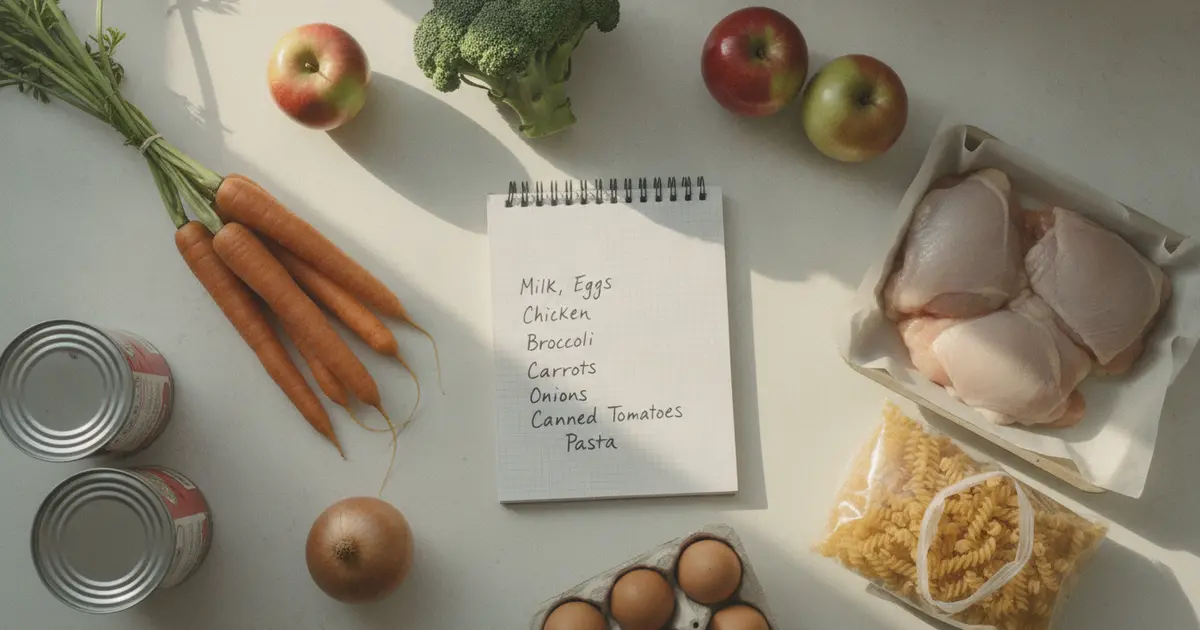
What’s a good budget grocery list for two people? A solid base list covers one versatile protein (chicken thighs or ground beef), 1-2 canned goods (tomatoes, beans), a starch (rice, pasta, or potatoes), 3-4 vegetables, eggs, dairy basics, and bread. Keep the fresh produce list short and plan at least one leftover night to stretch the week’s cart.
How do I cut my grocery bill for two people? The four highest-impact moves: shop at a discount store, build the full week’s plan before you leave the house, plan one batch-cook night that generates a second meal, and check your pantry before writing the list. Unplanned shopping and duplicate pantry buys are the two biggest sources of waste in a two-person household.
Open Mittsy, set your budget and store in onboarding, and the app plans the week and prices the list before you shop. Download on the App Store or Google Play.
Related reading: Grocery Budget: How Much to Spend by Household Size (2026)