
Want next week planned and priced? Mittsy is free.
Most households that overspend on groceries share one habit: they show up at the store without a plan. A quick dinner run becomes a full cart, and the total at checkout is always a surprise. Budget meal planning fixes this by moving the decision-making from the store to the kitchen table.
Budget meal planning for groceries means choosing your dinners for the week before writing a single item on your list. Build the list from those meals, subtract what’s already in the pantry, and shop once. Most families save $40–$80 a week with this habit, without eating worse or spending more time cooking.
Why Grocery Bills Grow Without a Plan
Grocery stores are designed to make you spend more. End caps, two-for-one deals, and oversized carts all push you toward a bigger bill. Without a meal plan, you’re deciding what to cook while standing in the most expensive place to make that call.
The average US household spends $459–$475 a month on groceries under the USDA’s 2025 Thrifty Food Plan, while the Liberal Plan ceiling reaches $1,100 for a family of four. Research from Cornell’s Food and Brand Lab found that shoppers without a list spend 23–43% more than those with one. A list built from a specific meal plan tightens this further: when you know you need 2.5 lb of chicken thighs for two dinners, you buy exactly that. Households that pair a weekly meal plan with a written grocery list before entering the store consistently save $40–$80 per trip versus unplanned shops of the same size. The logic is straightforward: decisions made at home cost nothing; decisions made in the aisle cost money. Planning also cuts food waste, which the USDA estimates at 30–40% of the US food supply, much of it fresh produce bought without a specific recipe in mind.
How Budget Meal Planning Works With Groceries
The key insight is that groceries and meal planning are one system, not two separate tasks. Plan the meals first, then build the grocery list from what you need. Buying what looks good at the store and deciding what to cook afterward costs more every time.
Here’s the system:
Step 1: Set your weekly budget before planning anything. Write the number down: $150, $200, $250, whatever fits your household. Planning without a target is just meal planning; planning against a number is budget meal planning.
Step 2: Check your pantry and fridge first. Pull out what’s already there before writing a single grocery item. Half a box of pasta, a can of chickpeas, two chicken thighs in the freezer: these are free dinners waiting to happen. Skipping this step means buying duplicates.
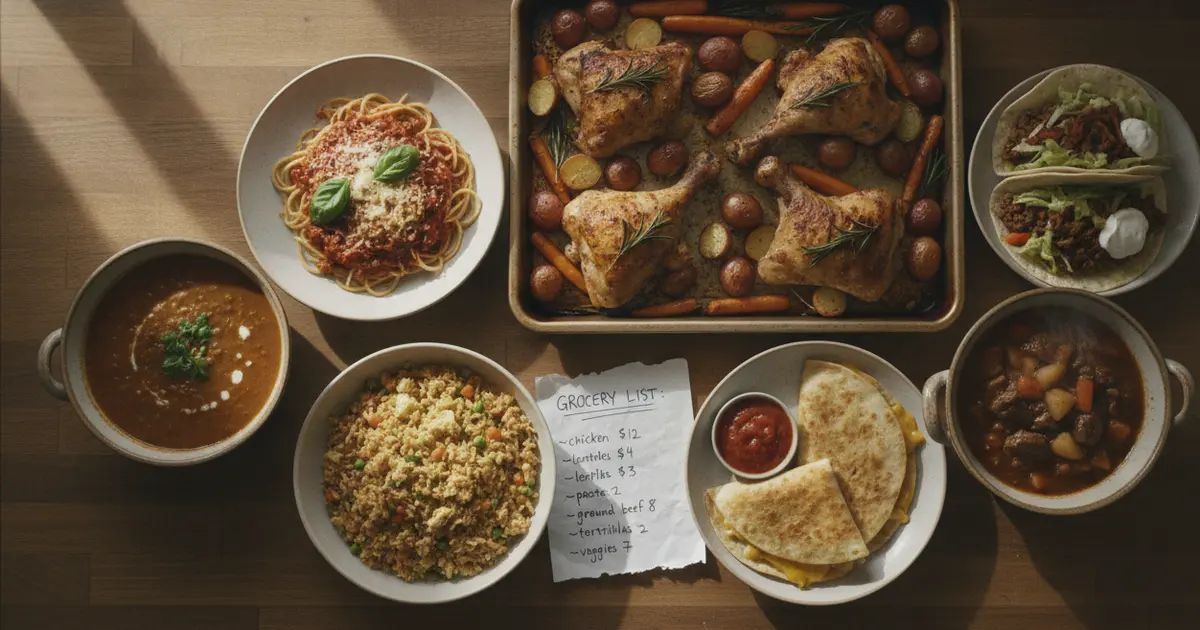
Step 3: Plan 5–7 dinners around what you already have. Start with fridge items that need using. Then fill the week with meals that share ingredients: chicken thighs in Tuesday’s sheet-pan dinner can reappear in Thursday’s soup with leftover vegetables and stock.
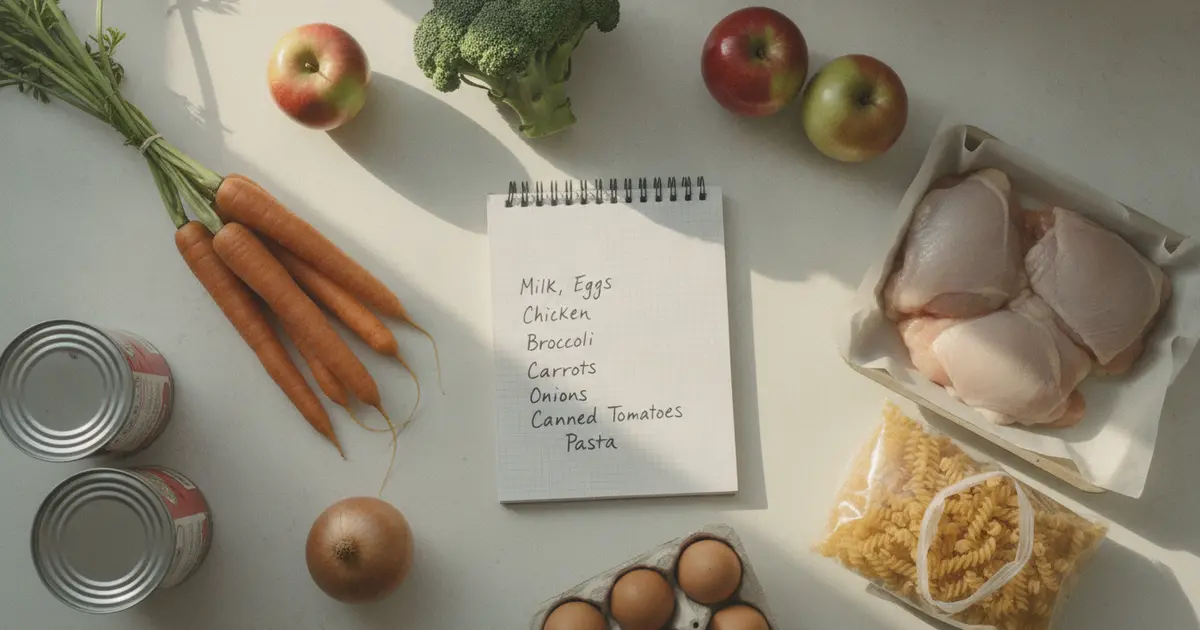
Step 4: Build the grocery list from the recipes, with quantities. “Chicken thighs” leads to buying whatever looks good. “2.5 lb chicken thighs” leads to buying 2.5 lb and stopping. Write quantities for everything.
Step 5: Price the list before you leave. Even rough estimates tell you whether the plan is on budget. If the total looks high, swap one protein before you head out, not at the checkout.
How to Build Your Budget Grocery List
A good grocery list has every item you need and nothing extra. A few habits keep it tight.
Group by store section. Produce, meat, dairy, canned goods, dry goods: move through the store in one pass. Doubling back through the snack aisle a second time is expensive.
Write quantities and pack sizes. “2 lb ground beef” is clearer than “ground beef.” For produce, specify counts or bunches: “1 bunch broccoli” instead of “broccoli.”
Cross off pantry staples you already have. Oil, canned tomatoes, rice, dried pasta: check before the list leaves your phone. If you have enough, don’t buy it.
Keep a running note of what runs out. When you use the last of something, note it immediately. A pantry list that stays current makes your grocery list shorter every week, because you stop buying duplicates of things you already own.
Households that actively track pantry staples spend an average of $15–$25 less per shopping trip than those who don’t. The savings come from one place: knowing what’s already there.
Choosing the Right Store for Budget Groceries
Store choice matters more than most coupons or deals. The same basket of groceries can cost $40–$80 more depending on where you shop.
For most US households, Aldi and Walmart are the two lowest-cost options for a standard weekly shop. Aldi runs 15–25% below Walmart on most staple items (rice, pasta, canned goods, dairy). Kroger and Target fall in the mid range. Whole Foods and Trader Joe’s cost more across the board unless you stick to their private-label lines.
A two-store approach works well when the gap is wide enough: pantry staples from Aldi, meat or produce from whichever store has the better price that week. The logistics cost time and gas, so it’s only worth it when savings clear $10–$15. For a full breakdown of which US chains rank cheapest, the cheapest grocery store guide has 9 chains ranked with price comparisons.
Store brands save 20–30% on average compared to name brands with similar nutrition labels. This is one of the easiest budget levers that doesn’t require changing what you eat at all.
When Grocery Prices Spike: Flexible Swaps
Food prices move. A protein that was $4.99/lb last month can be $6.99 this week. Building flexibility into your meal plan means a price spike doesn’t blow your budget.
Practical swaps that work most weeks:
- Chicken breasts up? Chicken thighs cost 30–40% less and work in almost every recipe that calls for breasts.
- Ground beef too high? Ground turkey or pork runs cheaper at most stores and handles tacos, pasta sauce, and meatballs without complaint.
- Fresh vegetables expensive? Frozen vegetables cost less, last longer, and have nearly identical nutrition. A frozen stir-fry bag at $2.49 beats fresh peppers and broccoli at $6+.
- Salmon or shrimp out of range? Canned tuna fills the same protein role in pasta dishes at a fraction of the cost.
When you plan around meal types rather than locked-in recipes, these swaps are easy. “A chicken dinner Thursday” adapts faster than “sheet-pan lemon herb chicken thighs Thursday.”
For benchmarks on what your household should expect to spend, the grocery budget guide has USDA Thrifty Plan numbers broken down by household size.
How Mittsy Handles Budget Meal Planning and Groceries
Mittsy is a meal planner and grocery list app that keeps your budget in view the whole time you plan.
The free version gives you a recipe cookbook with filters (diet, appliance, time, cuisine), a weekly planner where you drag, duplicate, or lock meals, and an aisle-sorted grocery list that builds automatically from the plan. Pantry items subtract from the list, so you only see what you actually need to buy. You can split the list between two stores if that’s how you shop.
Mittsy Pro adds estimated prices per ingredient line and a budget bar that shows where the week lands against your target before you leave the house. The “Plan my week” feature generates seven dinners around your budget, household size, diet, and the store you shop at. It wires the ingredient overlap in automatically: the same chicken thighs across Tuesday and Thursday appear as one combined line on the list, so it’s shorter than if you’d planned each dinner in isolation. Budget swap hints flag when a cheaper cut would save $4–$8 without changing the meal.
No account required. No ads. The grocery list runs in shopping mode with large checkboxes and the screen stays on.
If you’re building the broader planning system, how to meal plan on a budget covers the full six-step method that this article’s grocery steps plug into.
Frequently Asked Questions
What’s the most effective strategy for budget grocery shopping?
Plan your dinners before writing the list. Check your pantry first, subtract what you already have, and price the list against your weekly budget before entering the store. Buying only what’s on the list, with quantities written in, prevents overspending more reliably than any coupon strategy.
How much should I budget for groceries each week?
The USDA 2025 Thrifty Food Plan sets $198/week for a family of four as a realistic minimum. Single adults average $72–$84/week; couples $148–$175. These are planning floors. Your actual number depends on your stores, diet, and how often you cook at home versus eating out.
Can budget meal planning really save that much money?
A typical unplanned grocery trip for a family of four runs $150–$200. A planned trip for the same household, buying only what’s needed for the week, runs $90–$130. That gap adds up: $40–$70 less per week is $2,000–$3,600/year.
How do I stop impulse buying at the grocery store?
Shop from a list with quantities written in. Eat something before you go. Move through the store in one pass. Avoid browsing the prepared-food section if it’s not in the plan. These four habits cut impulse spending more reliably than willpower.
Does meal planning still save money when grocery prices are high?
Yes, often more. When you know exactly what you’re buying, you can swap a $6.99/lb protein for a $3.99 alternative before the trip and keep the week on budget. Unplanned shoppers face that decision under price pressure in the aisle, which usually costs more.
If you want the grocery list and price tracking handled automatically, Mittsy builds the aisle-sorted list from your plan, shows estimated prices per line, and flags budget swap hints before you leave the house. Download Mittsy free on iOS or Android.